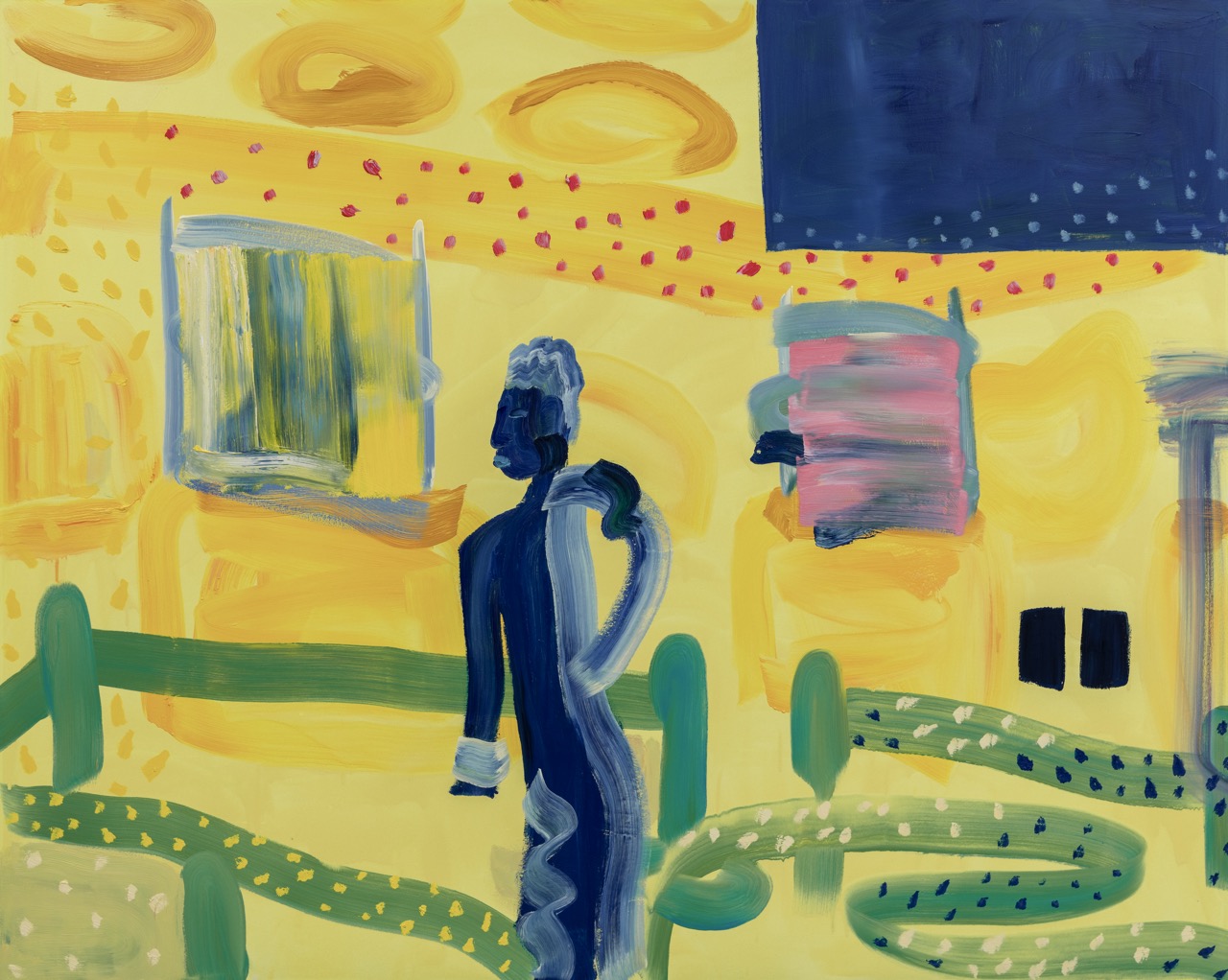
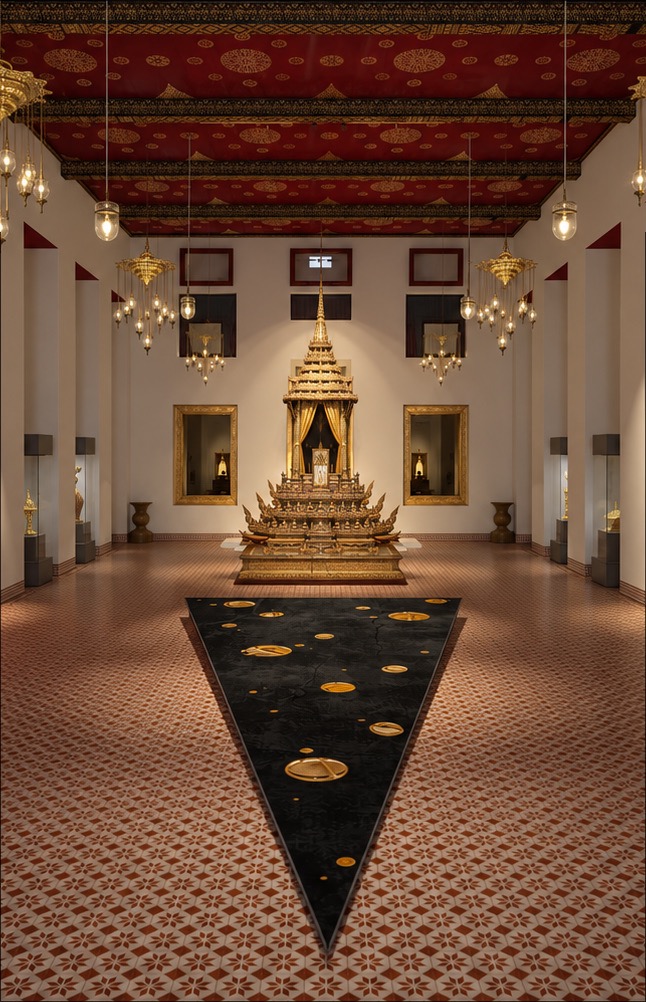
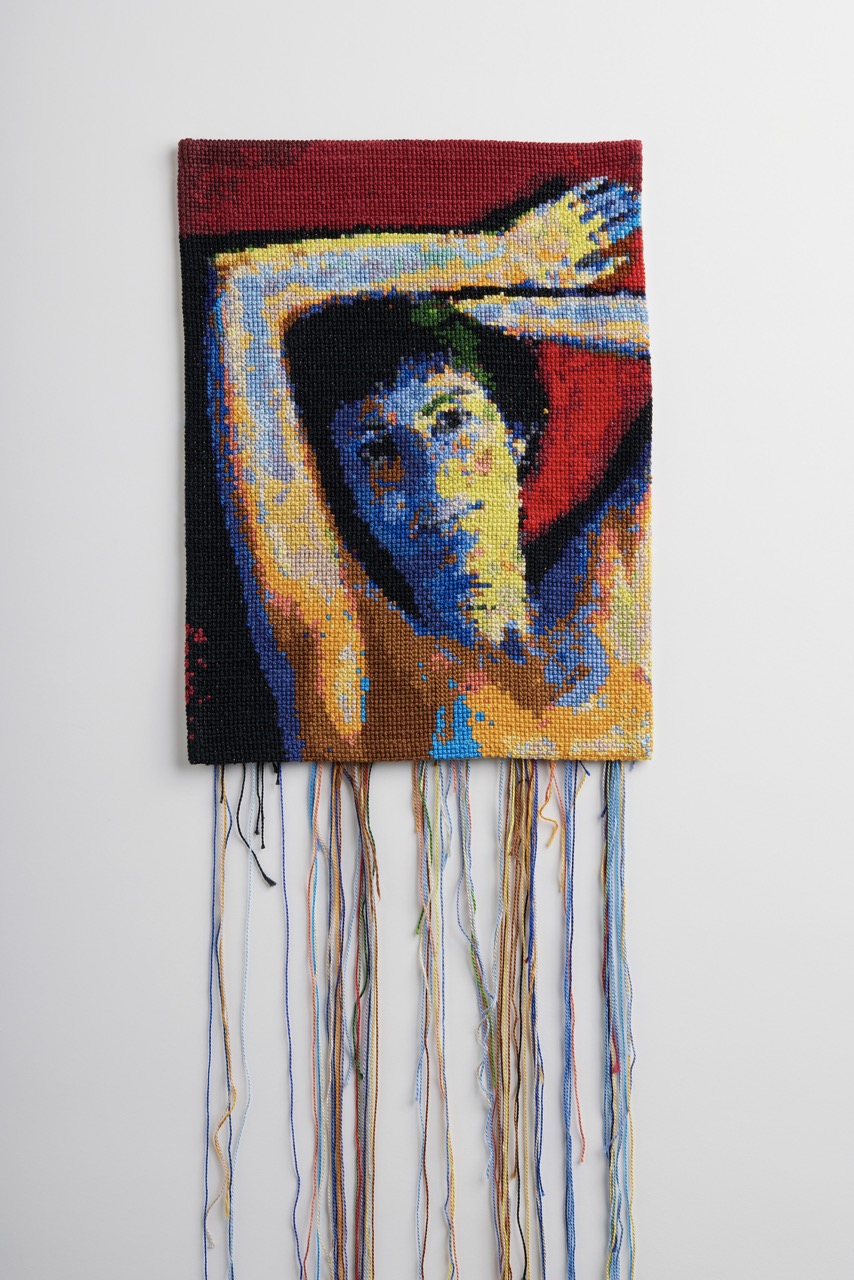
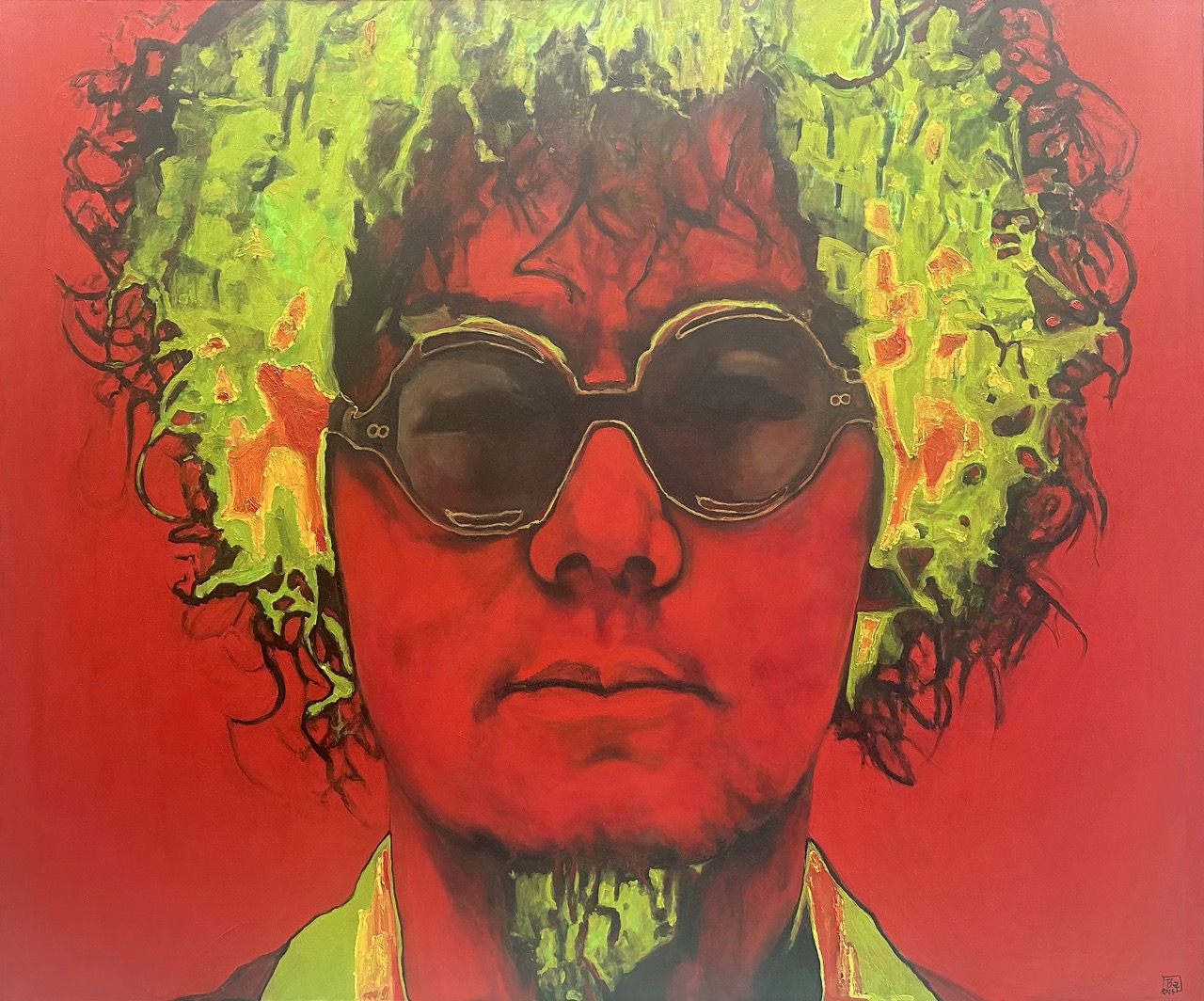
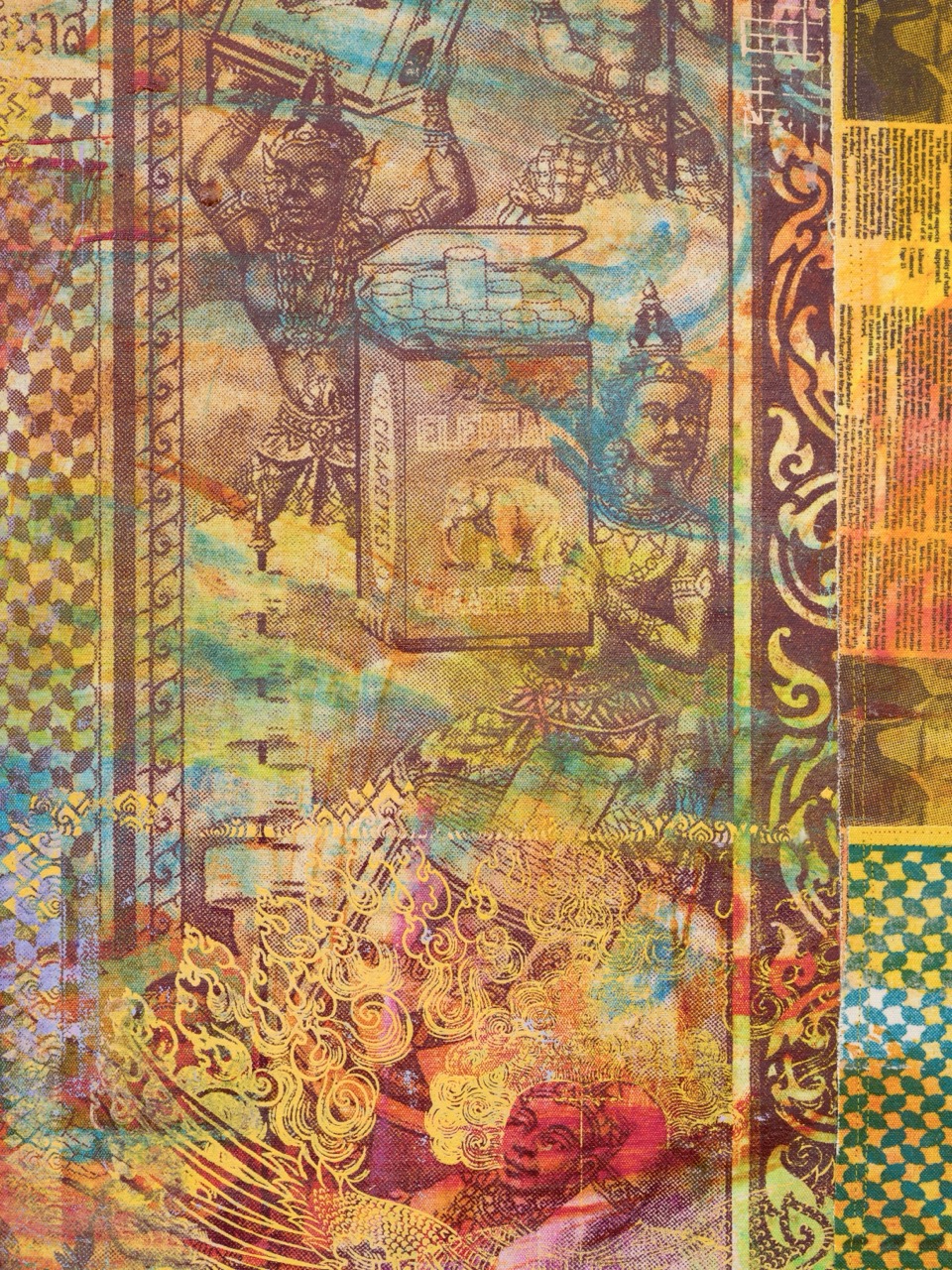
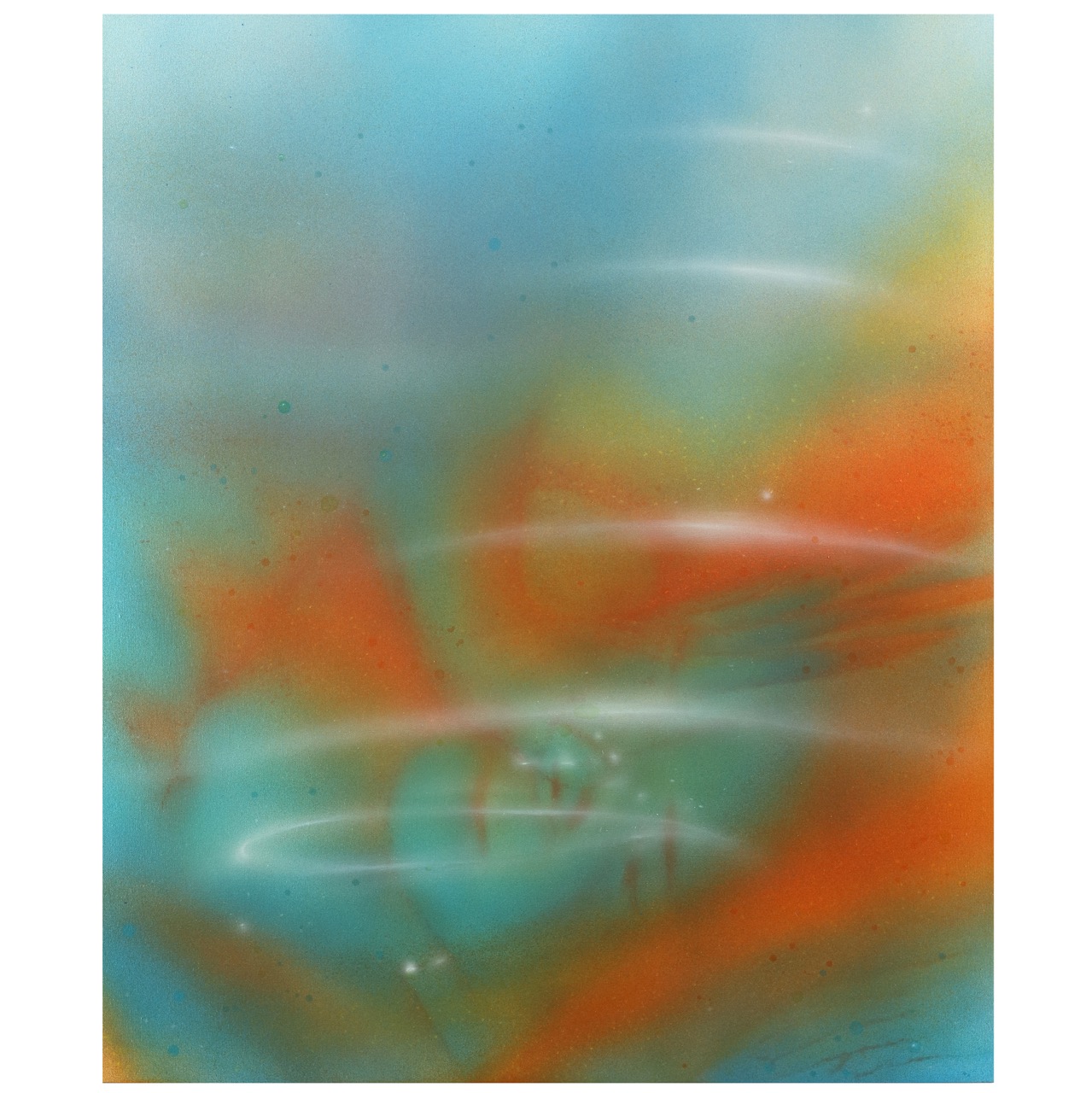
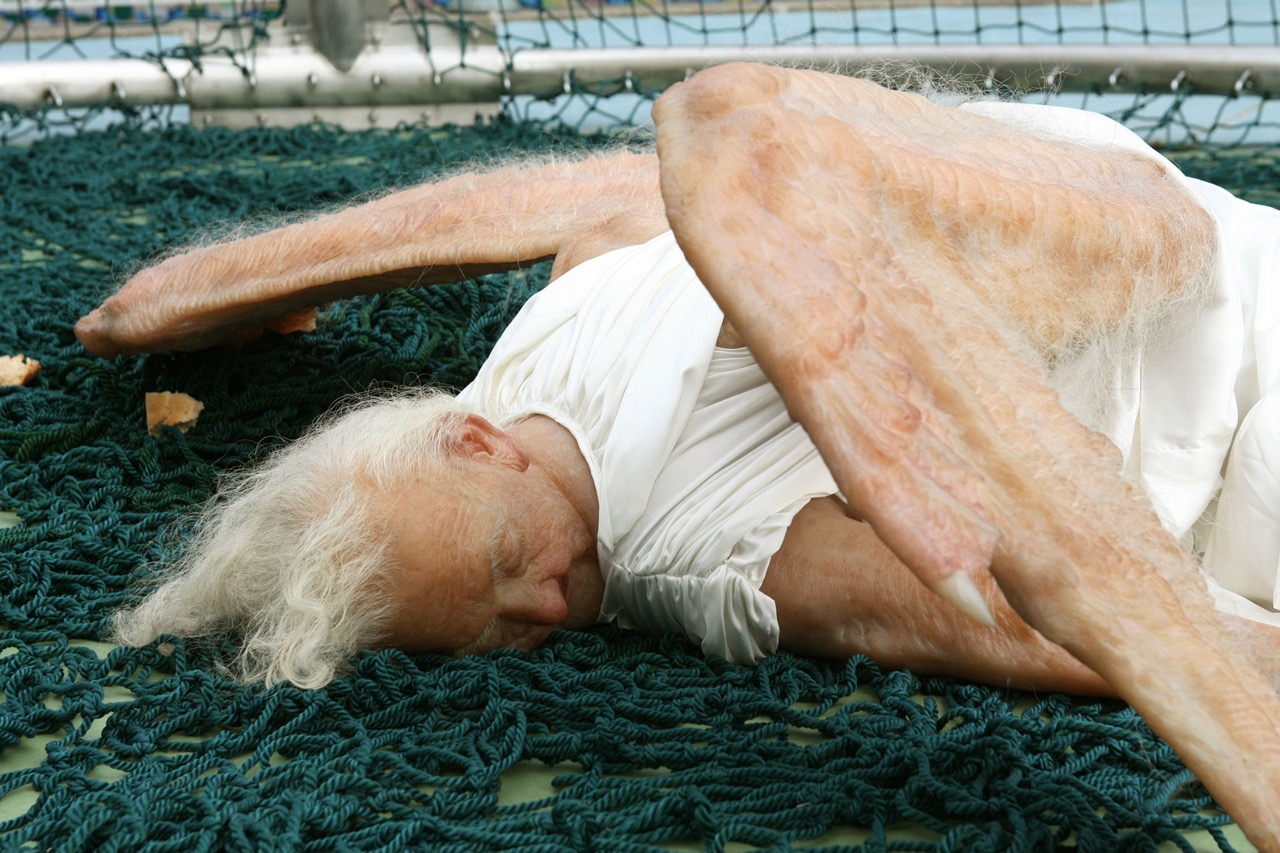
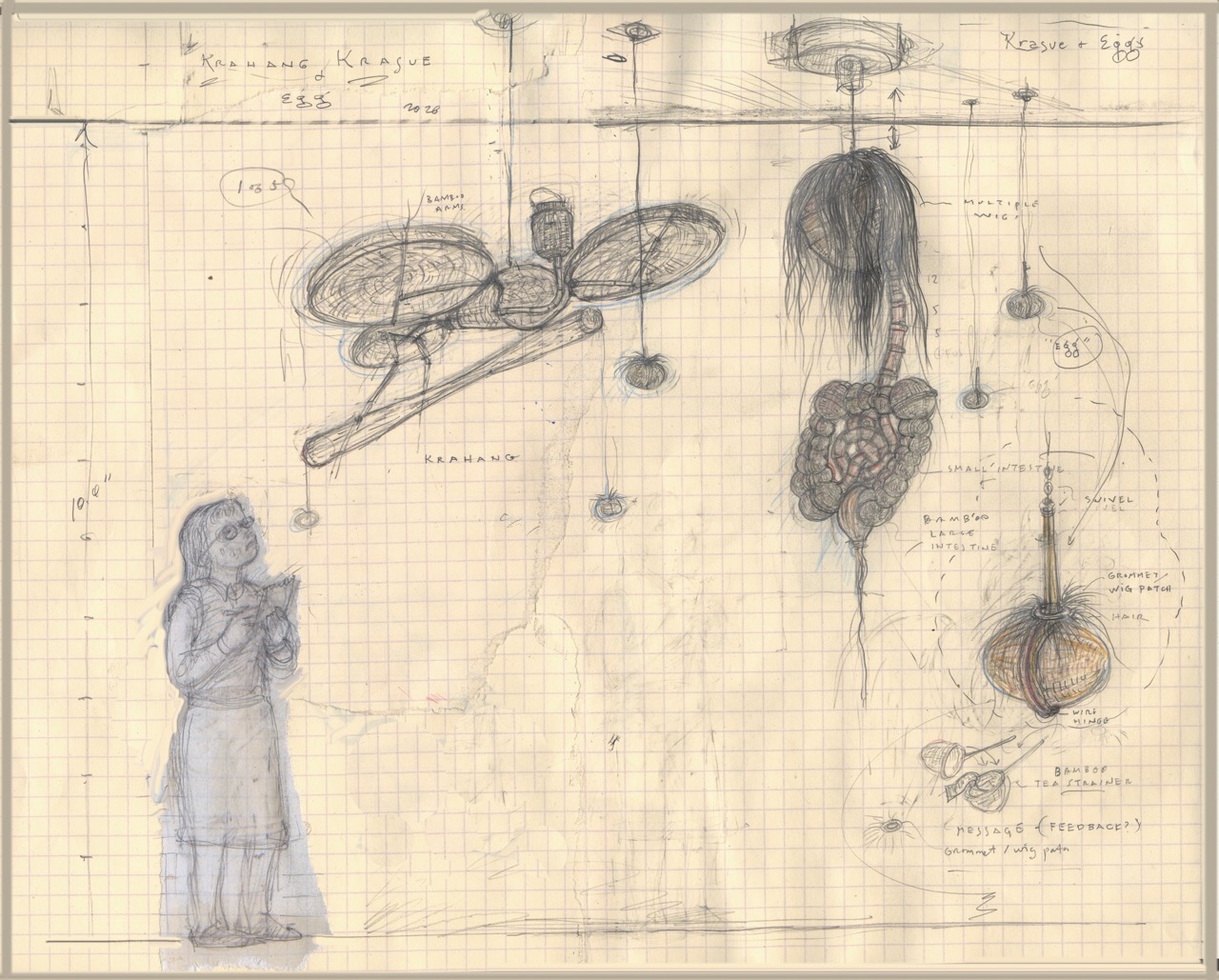
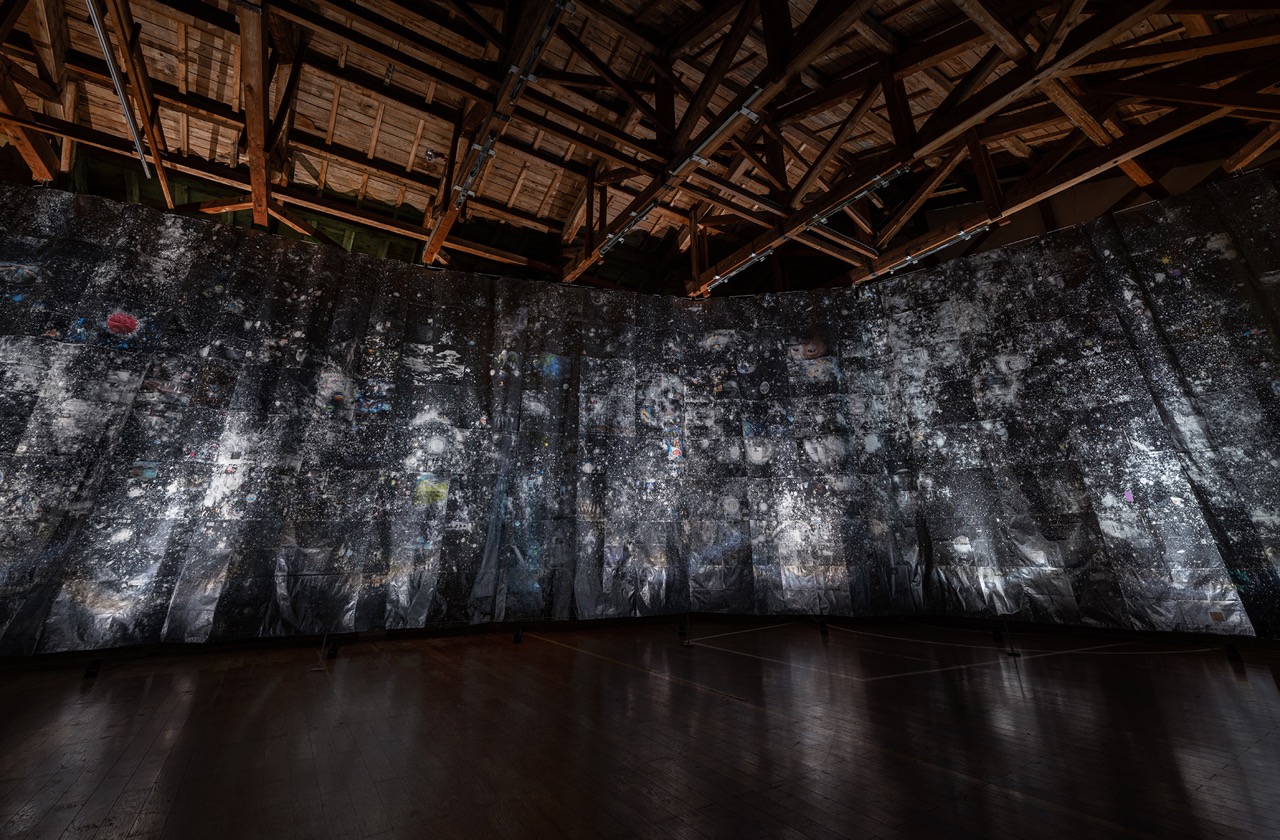
Gold Rush (2026) extends Chanvipava’s ongoing inquiry into duality, responding to the conceptual framework of Angels & Mara, where opposing forces such as urgency and stillness exist in constant tension. The painting captures a figure in transit, navigating passport control—rushing yet patient— evoking migration across geographies and time. Gold Rush reflects on identity as a continual negotiation shaped by memory, migration, and cultural exchange. Drawing from his experience between East and West, as well as his queer upbringing across conservative contexts and environments of greater openness in the United Kingdom, Chanvipava explores the complexities of belonging and selfhood. Presented as an installation, the canvas hovers above a field of dried rice paddy, accompanied by a ladder that evokes ancestry, labor, and cultural continuity. A streetlamp introduces light and shadow, reinforcing transformation as both a personal and collective experience.
Gold Rush (พ.ศ. 2569) ต่อยอดการตั้งคำถามของชนาธิปเรื่องทวิลักษณ์ ตอบรับกับแนวคิด นางฟ้าผจญมาร ที่พลังตรงกันข้ามอย่างความเร่งรีบและความสงบนิ่งดำรงอยู่ร่วมกัน ภาพเขียนเสนอภาพขณะกำลังผ่านด่านตรวจคนเข้าเมือง มีความเร่งรีบแต่อดทน แสดงให้เห็นการอพยพย้ายถิ่นข้ามทั้งภูมิศาสตร์และกาลเวลา Gold Rush สะท้อนอัตลักษณ์ที่ถูกหล่อหลอมด้วยความทรงจำ การย้ายถิ่นและการแลกเปลี่ยนทางวัฒนธรรม จากประสบการณ์ชีวิตที่อยู่ระหว่างโลกตะวันออกและตะวันตก ตลอดจนการเติบโตในฐานะเพศหลากหลายในสังคมอนุรักษ์นิยมและในสหราชอาณาจักรที่เปิดกว้างมากกว่า ชนาธิปได้สำรวจความซับซ้อนของการเป็นส่วนหนึ่งและความเป็นตัวของตัวเอง ภาพเขียนนี้แขวนอยู่เหนือผืนนาข้าวแห้ง ประกอบกับบันไดที่ชวนให้คิดถึงบรรพบุรุษ แรงงานและความสืบเนื่องทางวัฒนธรรม เสาไฟให้แสงและเงา ตอกย้ำว่าการแปรเปลี่ยนนั้นเป็นทั้งประสบการณ์ส่วนบุคคลและสังคม