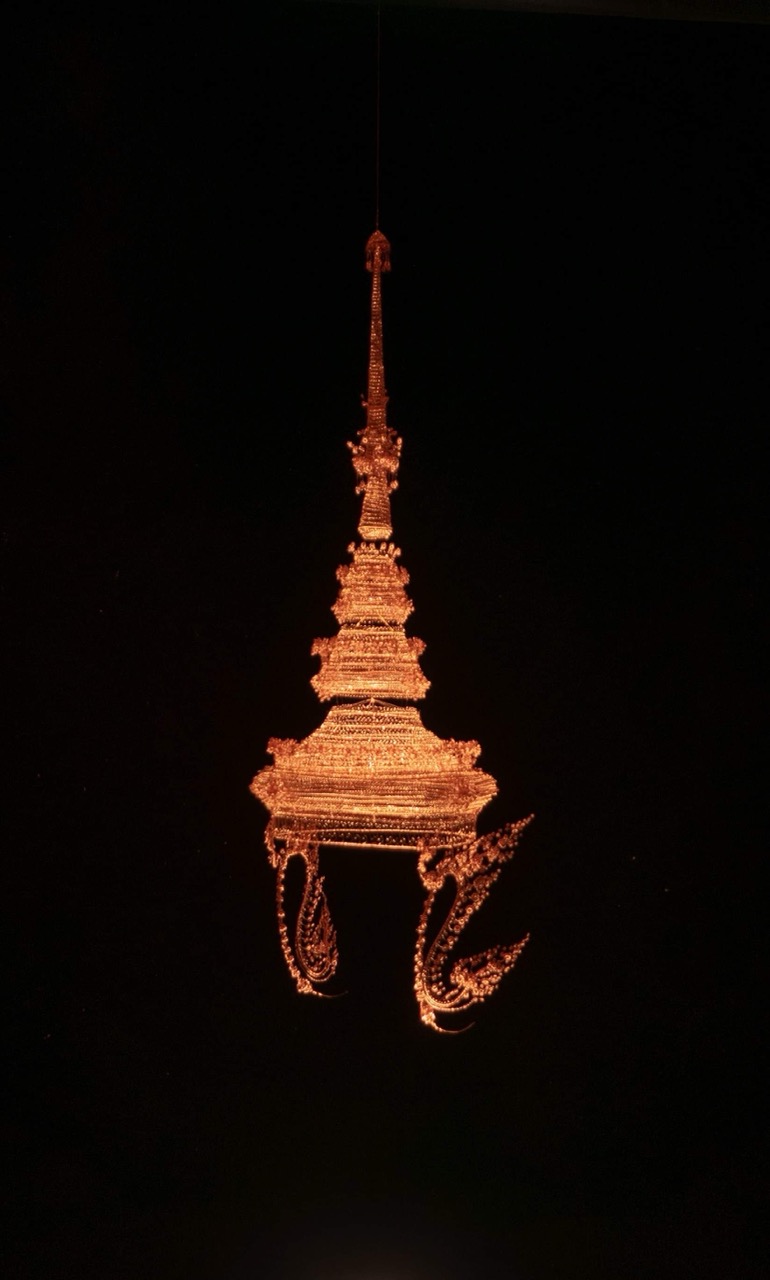
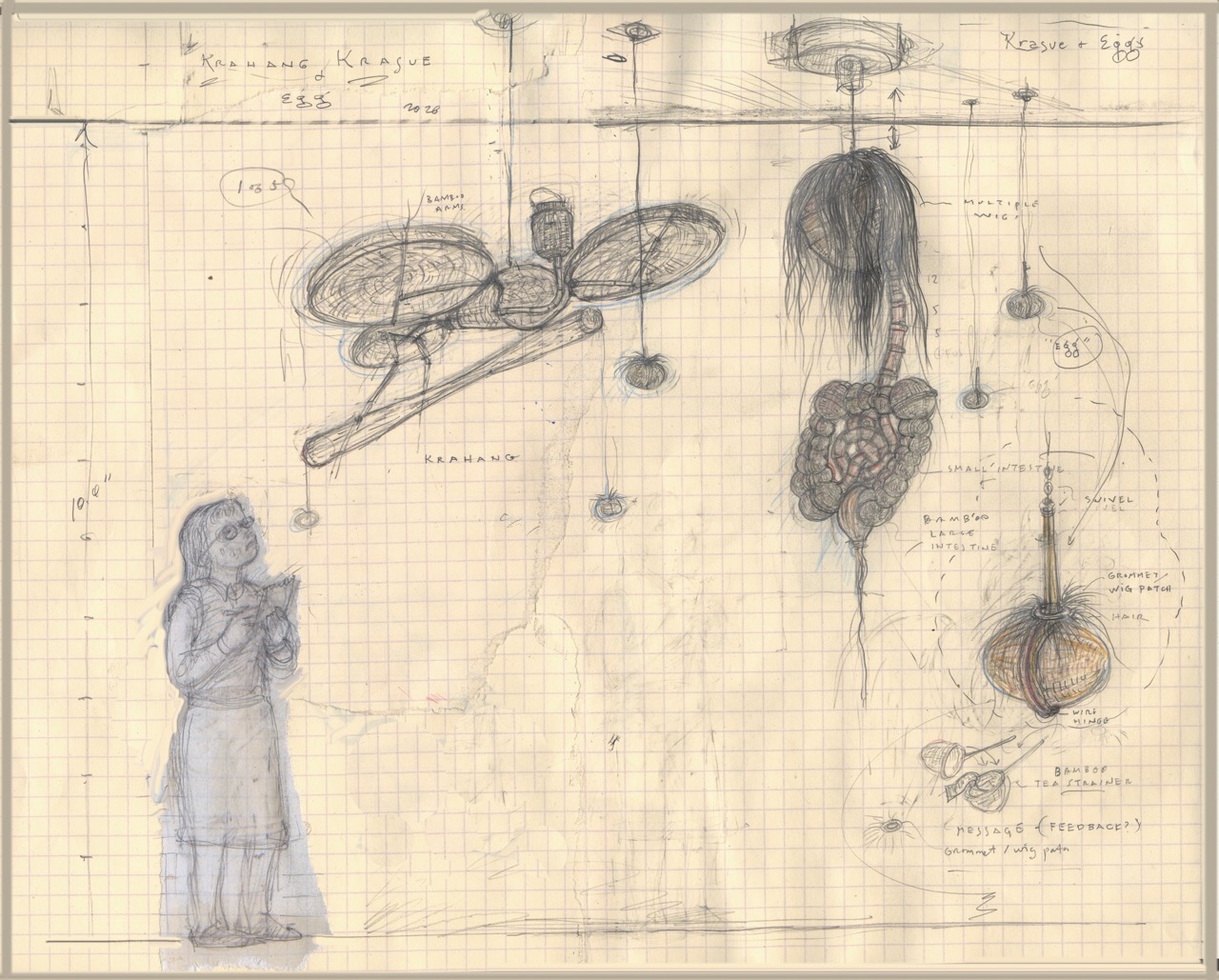
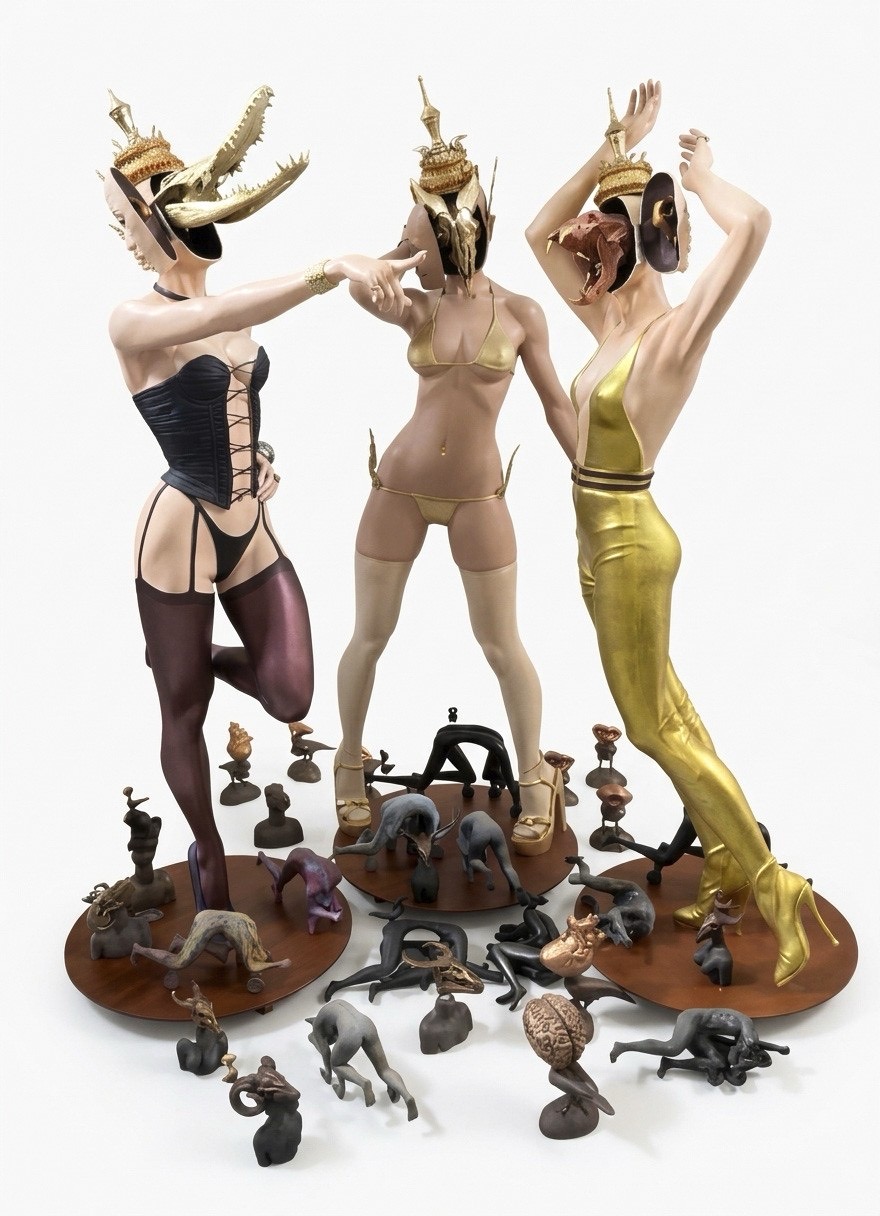
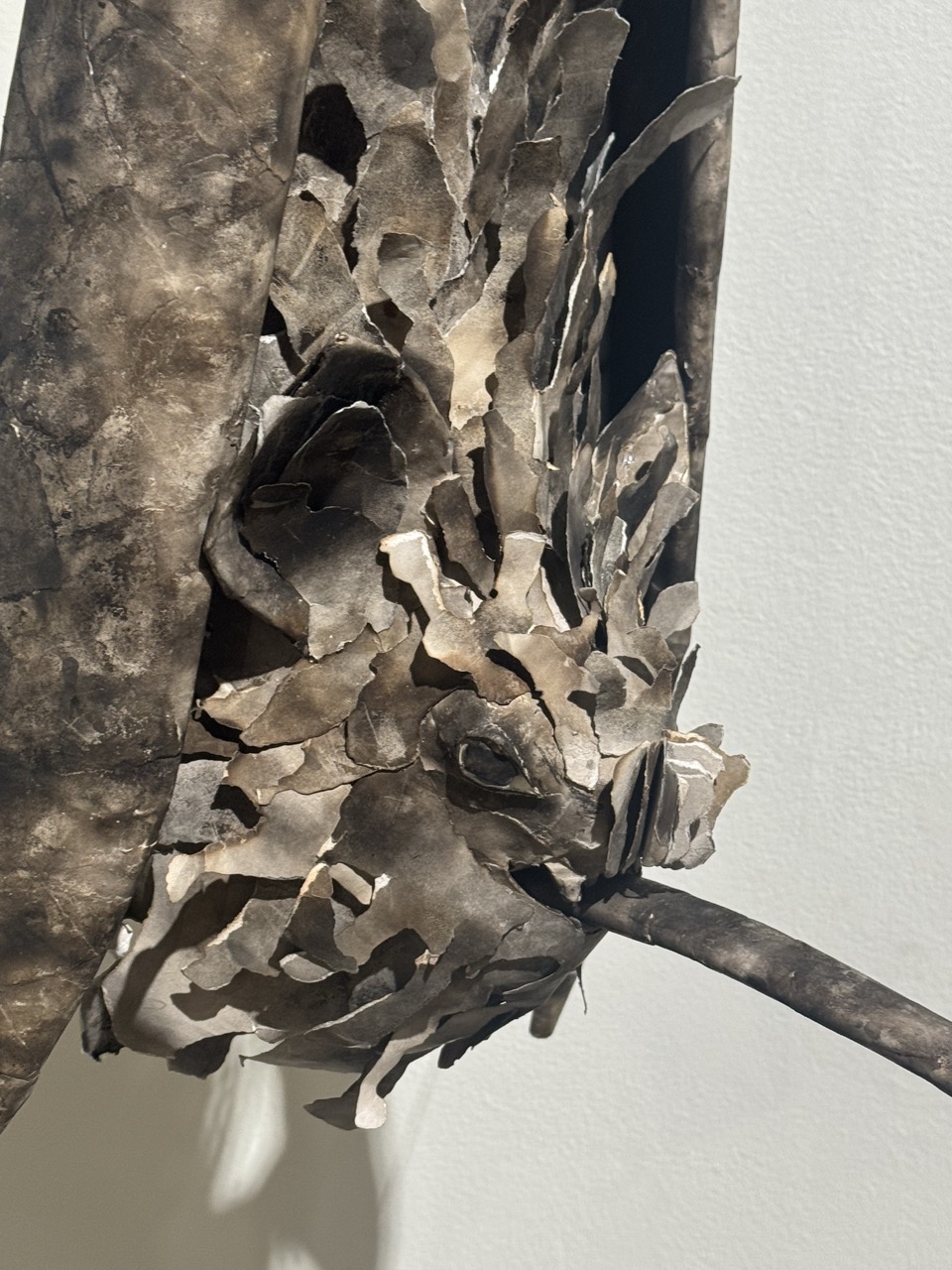
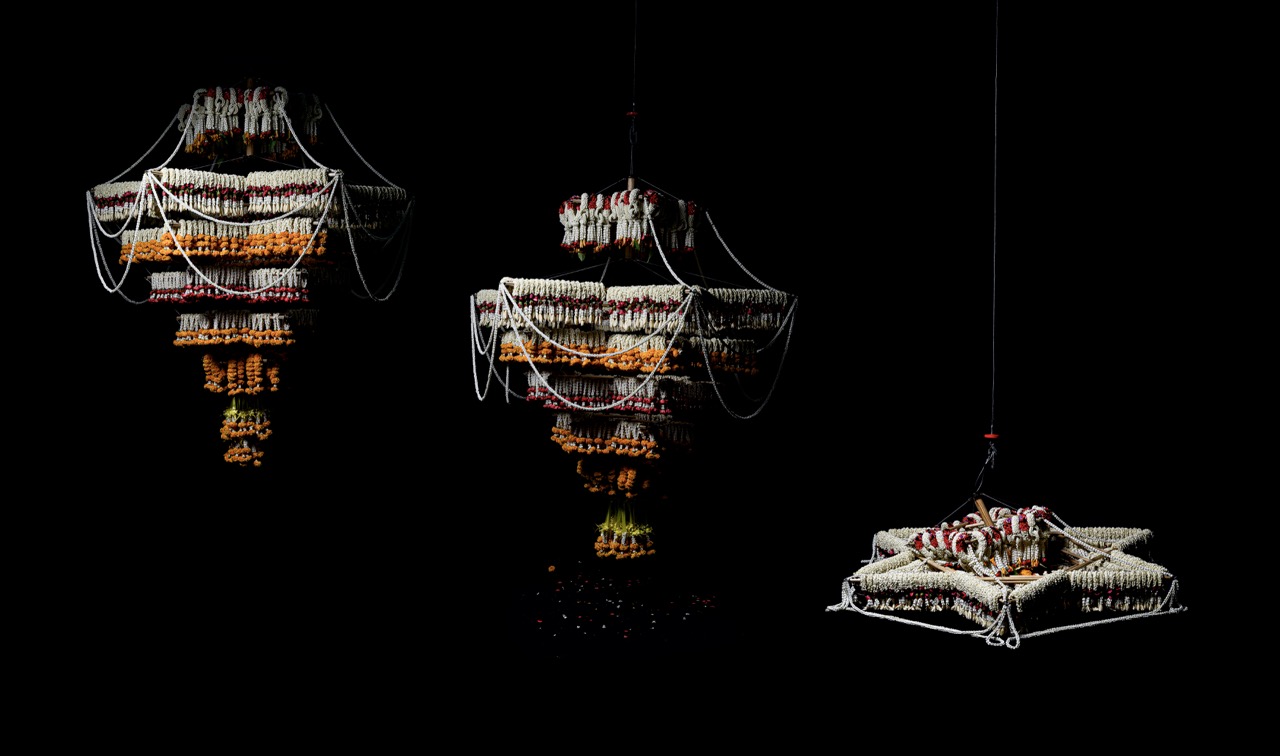
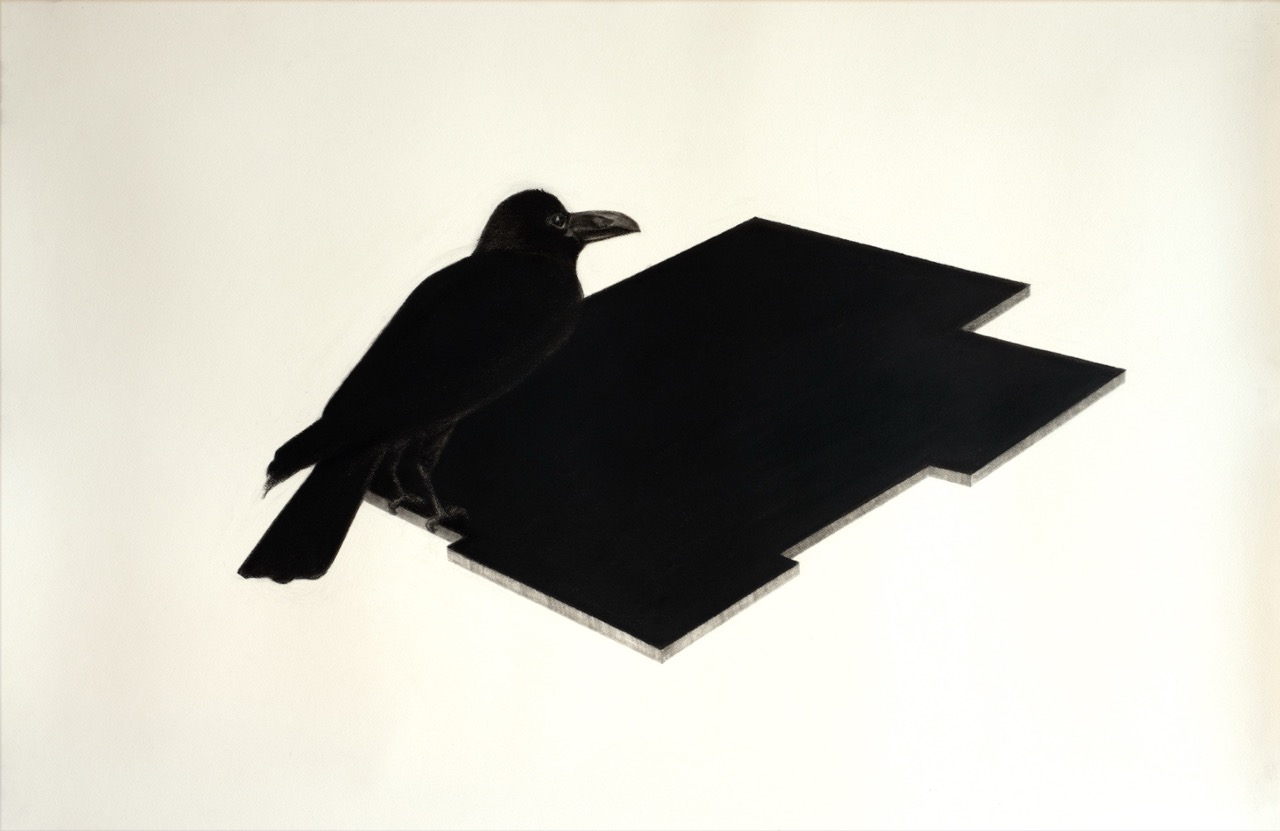
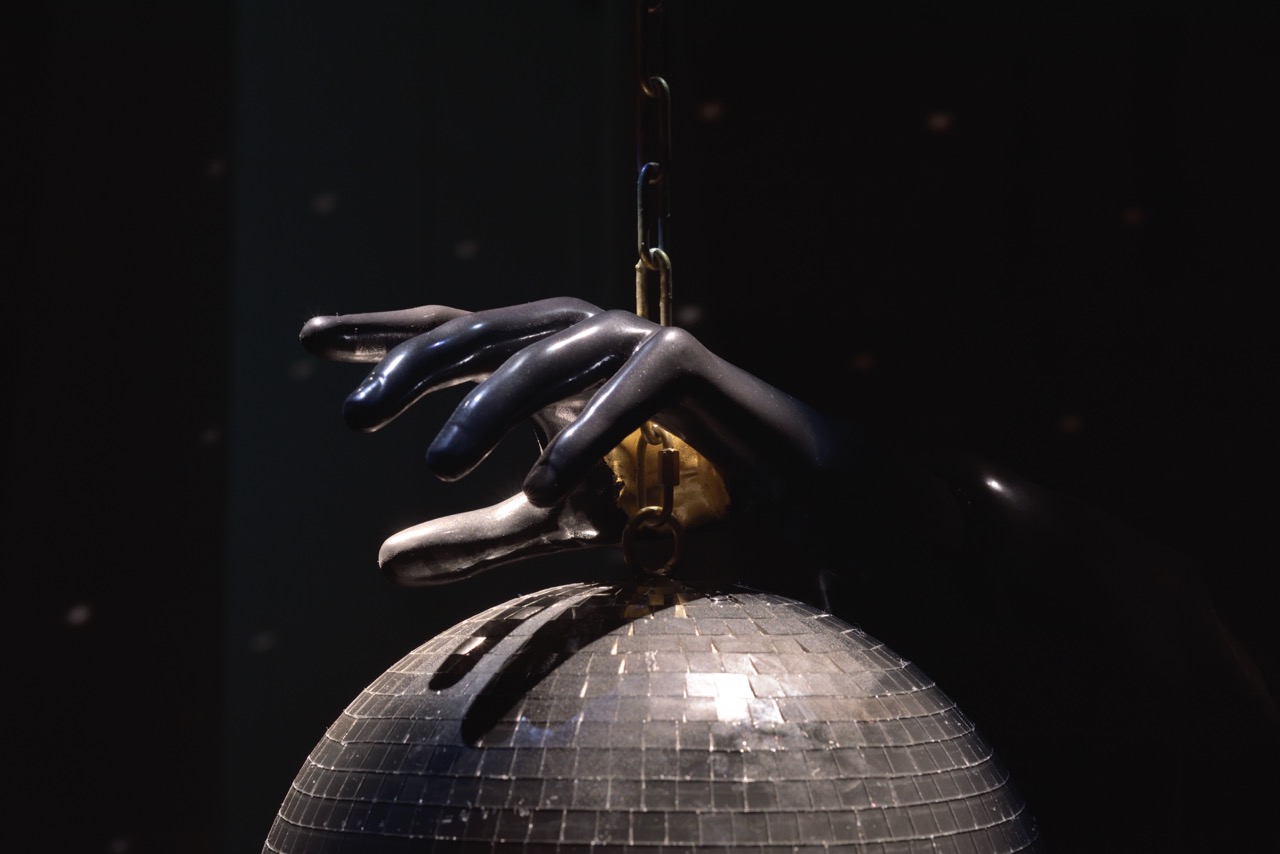
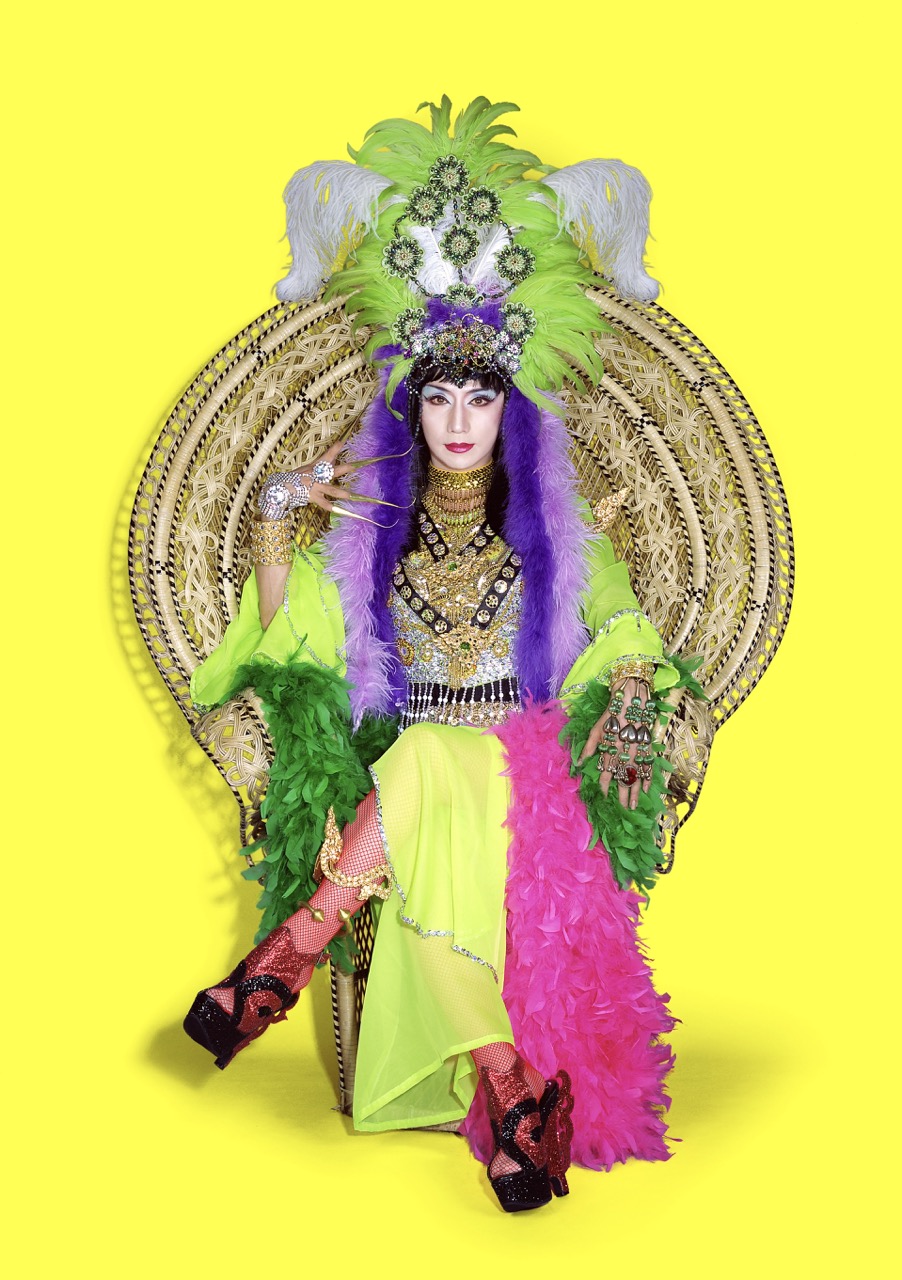
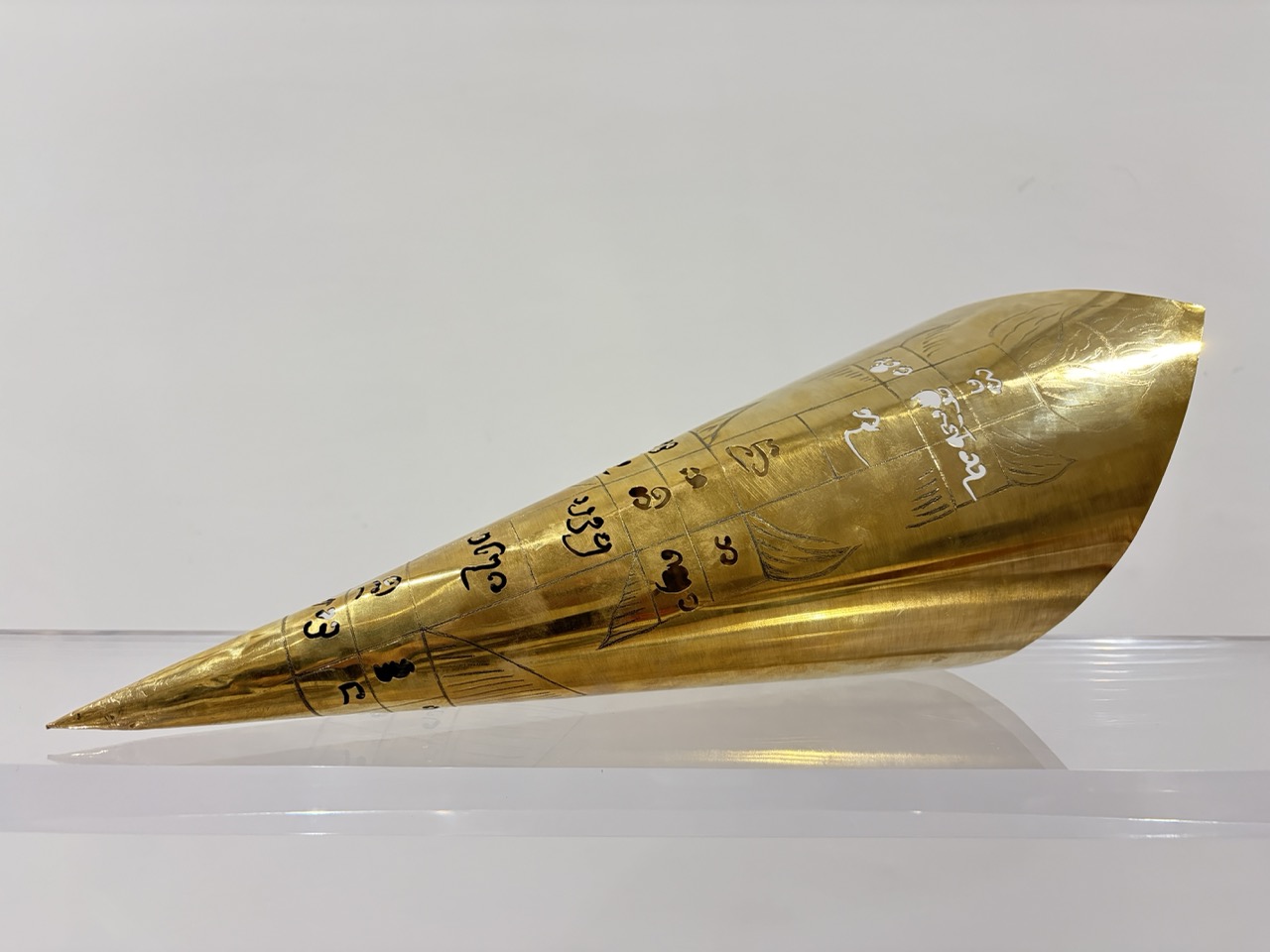
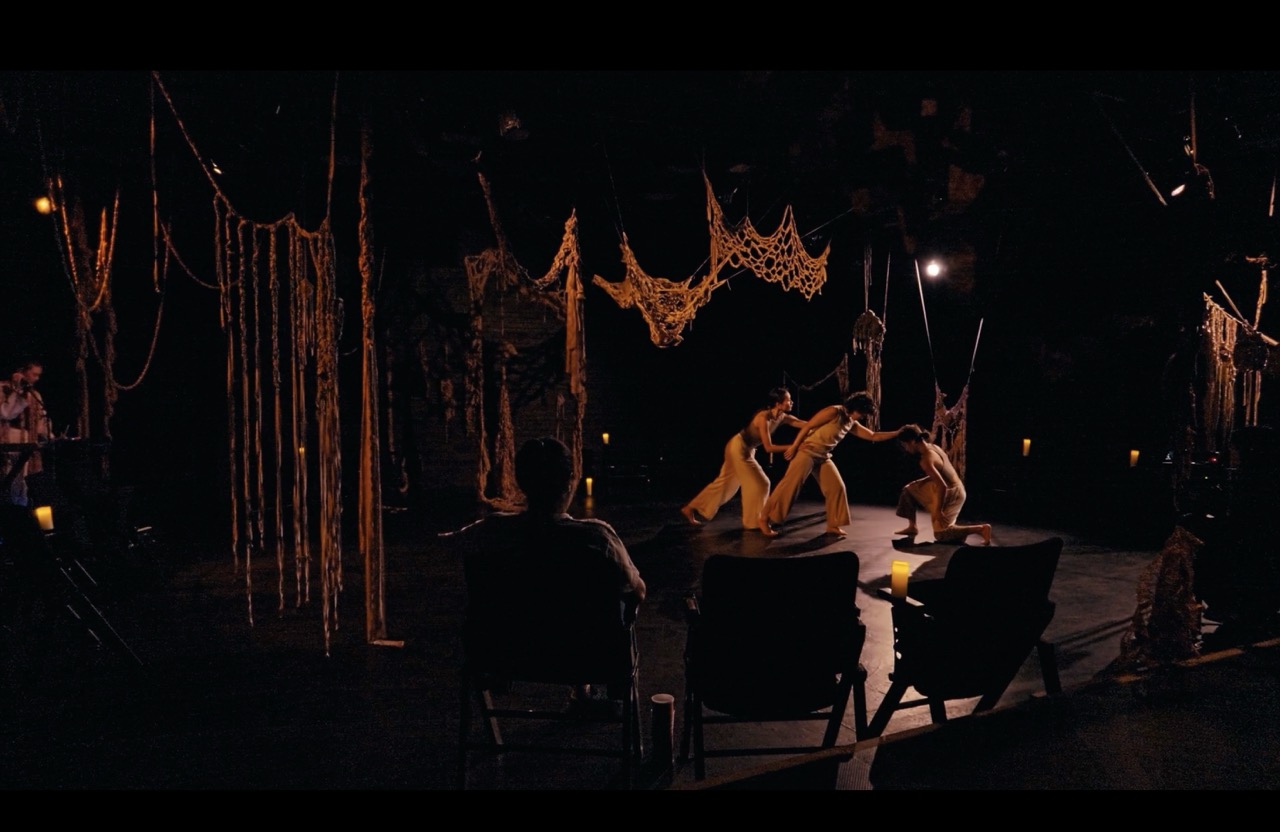
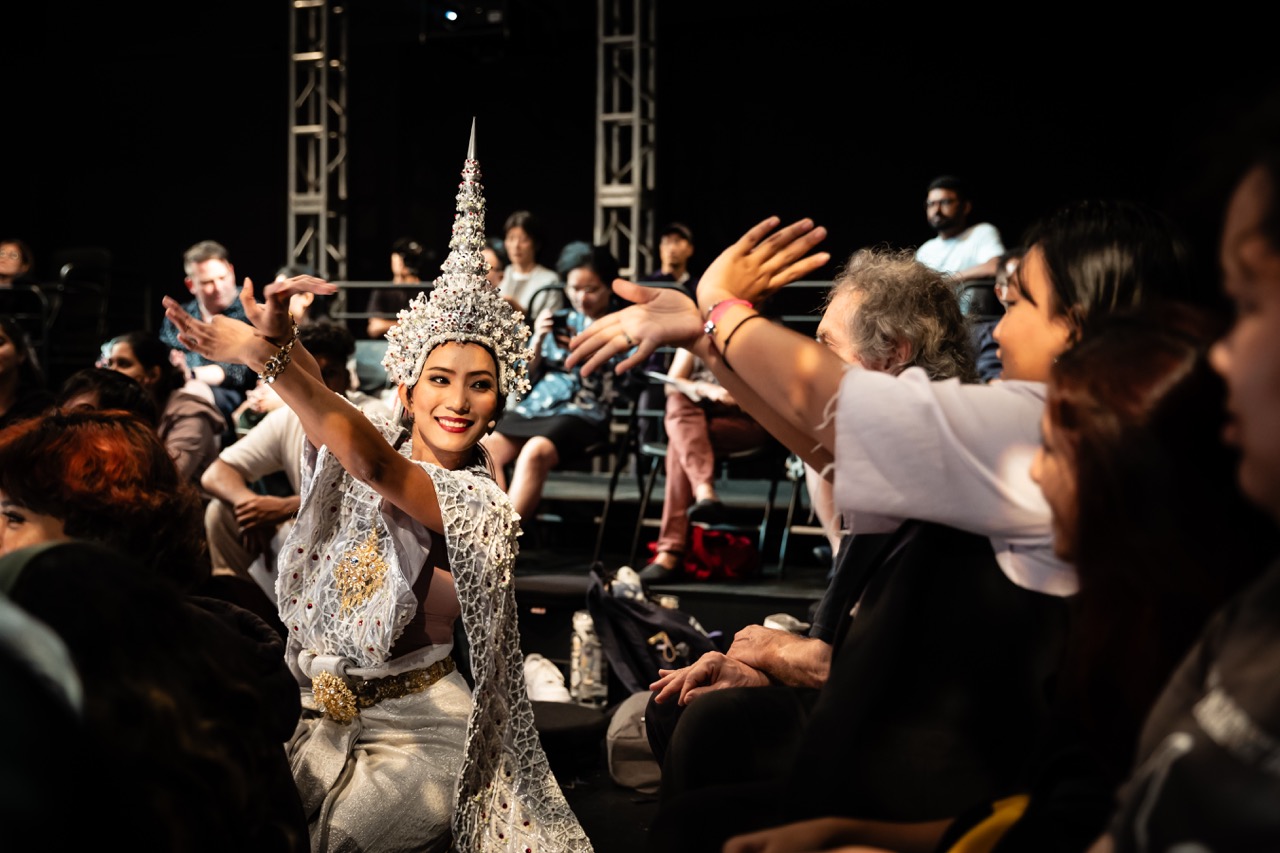
In Love is in the Air (2026), Chin reinterprets the folkloric figures of Krasue and Krahang through a dance floor disco installation, using levity to transform fear and open up the possibility for compassion for the passion of very diverse others. Created as a suspended mandala recalling both a ceremonial ornament and a disco ball, the work is constructed from traditional Thai baskets and agricultural tools associated with the cultivation of rice, drawing on the intertwined histories of Thailand and Cambodia, where myths have often been shaped by prejudice and political division. Chin transforms these formerly “monstrous” beings into playful, interconnected forms hovering between ritual and celebration, and dissolving rigid oppositions between good and evil, deity and demon, self and other.
Love is in the Air (พ.ศ. 2569) ตีความตัวละครในคติพื้นบ้านอย่างกระสือและกระหังใหม่ผ่านงานจัดวางฟลอร์เต้นรำดิสโก ใช้ความรื่นรมย์แปรเปลี่ยนความกลัวและเปิดความเป็นไปได้ที่จะเห็นอกเห็นใจความปรารถนาอันแรงกล้าของผู้อื่นที่มีความหลากหลาย งานชิ้นนี้สร้างขึ้นในลักษณะมณฑล (มันดาลา) แขวนลอย ชวนให้นึกถึงทั้งเครื่องแขวนในพิธีกรรมและลูกบอลดิสโก โครงสร้างงานประกอบขึ้นจากเครื่องสานไทยโบราณและอุปกรณ์การเกษตรที่เกี่ยวข้องกับการทำนาข้าว เชื่อมโยงกับประวัติศาสตร์ที่ร้อยเกี่ยวข้องกันของไทยและกัมพูชา พื้นที่ซึ่งเรื่องเล่าปรัมปรามักถูกแต่งแต้มด้วยอคติและความขัดแย้งทางการเมือง ชินได้เปลี่ยนอมนุษย์ที่เคยถูกมองว่า “น่าเกลียดน่ากลัว” ให้เป็นรูปทรงขี้เล่นและเชื่อมโยงถึงกัน ลอยอยู่ระหว่างมิติของพิธีกรรมกับการเฉลิมฉลอง พร้อมทั้งทลายขั้วตรงข้ามอันแข็งขืนระหว่างความดีกับความชั่ว เทวดากับอสูร หรือตัวเรากับผู้อื่น