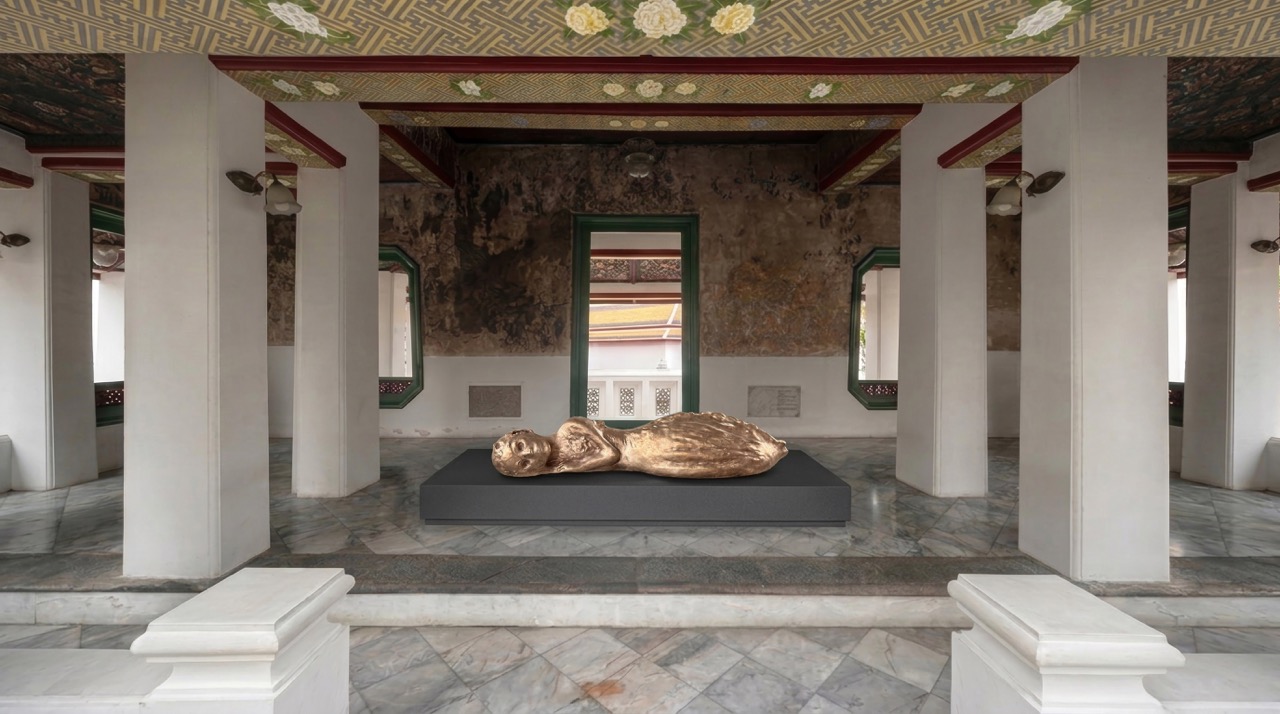
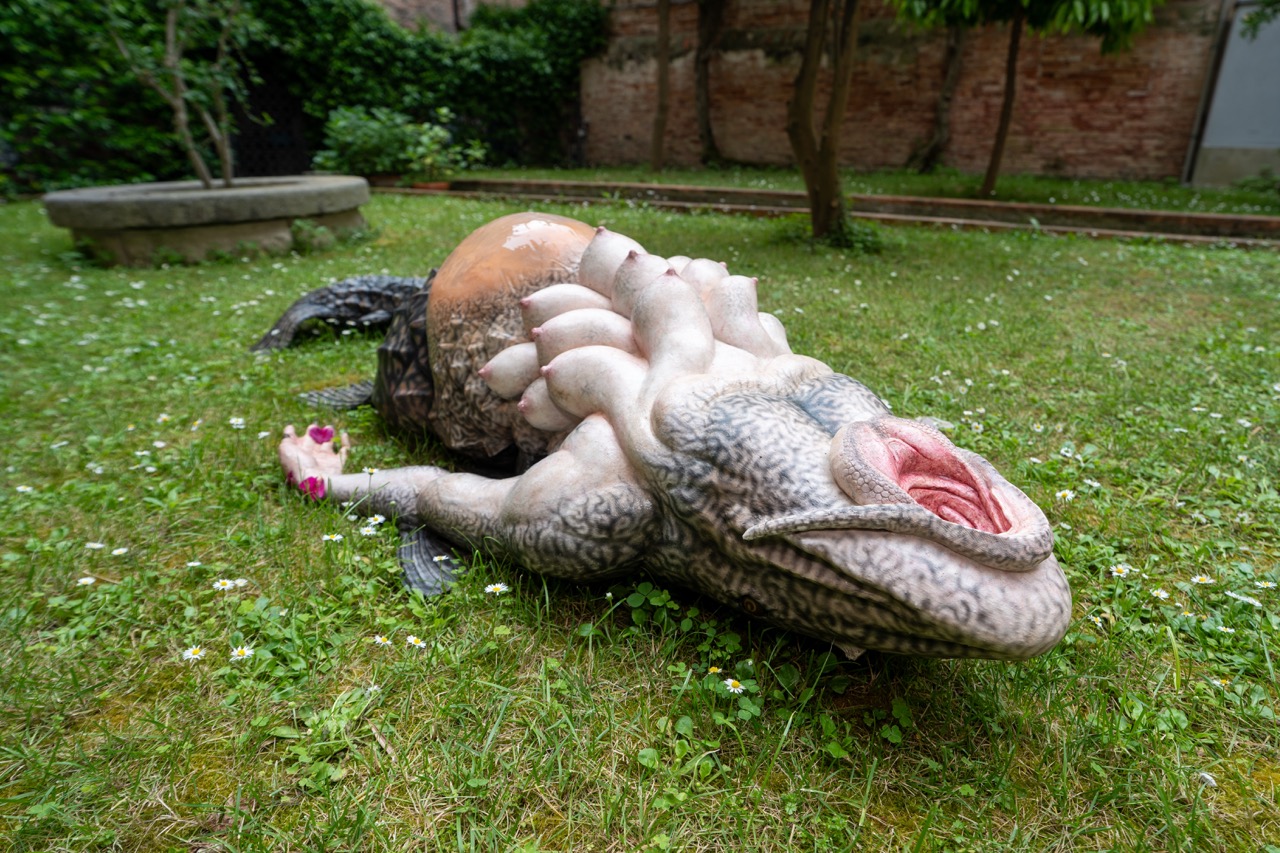
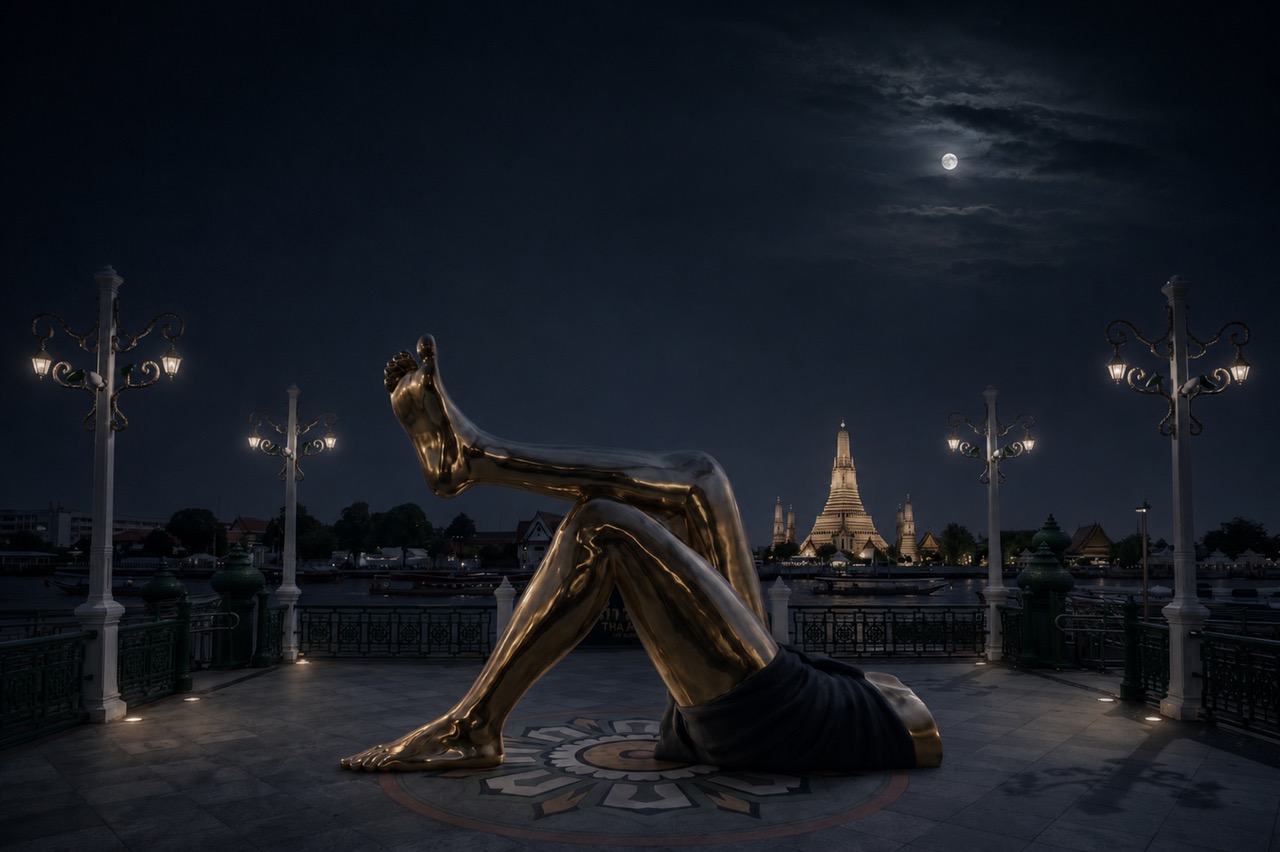
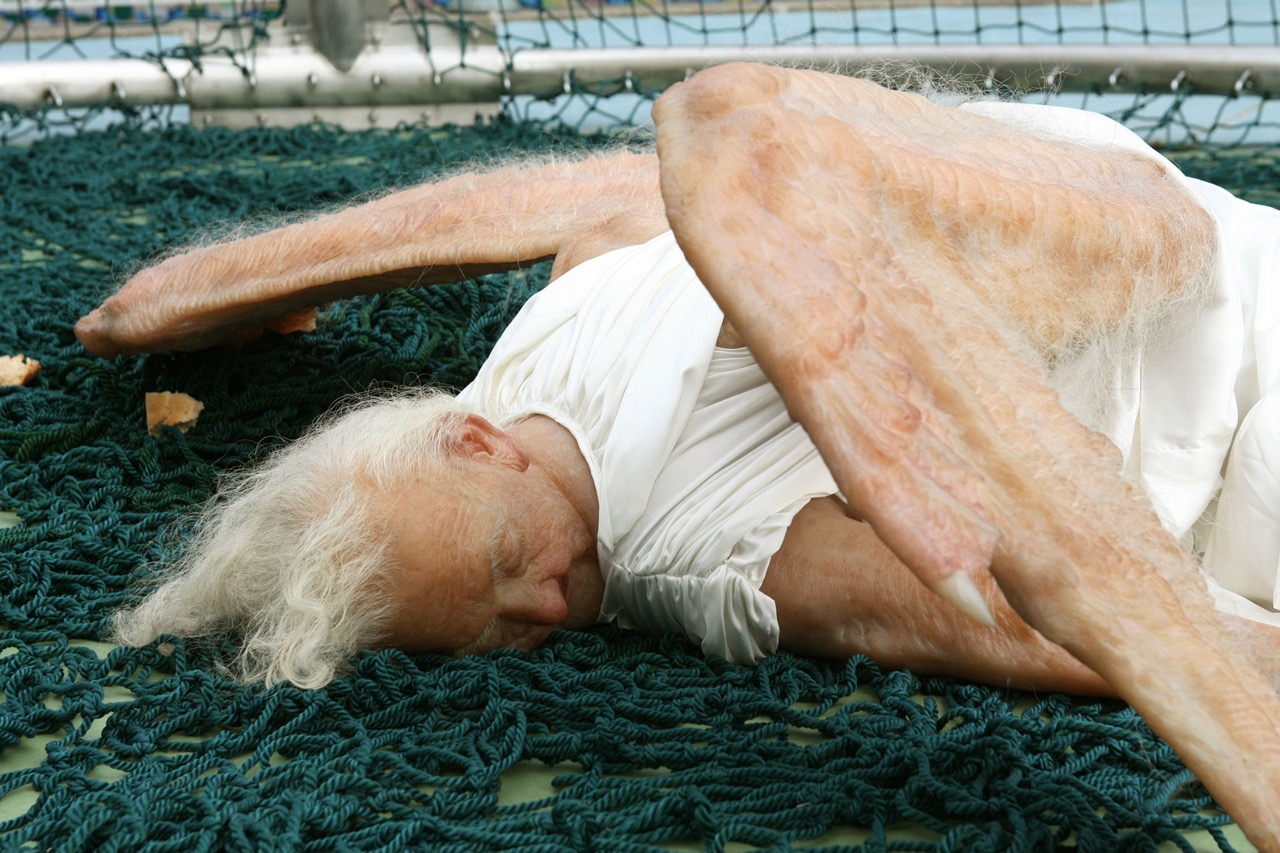
The bronze figure Memento Mori (2013/26) by Ikemura describes the natural cycle of life and renewal. The Latin title, “Remember that you are mortal,” evokes a long-standing pictorial tradition rooted in the Renaissance, particularly in still-life works. Recurring motifs such as the withered flower or the skull seem to have been taken up in Ikemura’s figure. The reclining pose refers to the tradition of lying sculptures known since the Middle Ages and at the same time recalls the monumental Buddha statue at Wat Pho. As a counterpart, the figures Wu-san (2004/05) and Ma-san (2004/05)stand on two high pillars. Meaning respectively “Angel from Cologne” and “Devil from Cologne,” they embody opposing yet complementary forces of angelic and demonic nature.
ผลงานประติมากรรมสัมฤทธิ์ Memento Mori (พ.ศ. 2556/69) แสดงวัฏจักรธรรมชาติของชีวิตและการกำเนิดใหม่ ชื่อผลงานภาษาละตินที่แปลว่า “จงตระหนักว่าตนเองต้องมอดม้วย” นั้น สะท้อนขนบเก่าแก่ซึ่งมีรากฐานมาจากยุคฟื้นฟูศิลปวิทยาการโดยเฉพาะอย่างยิ่งในภาพหุ่นนิ่ง อิเคมูระนำสัญลักษณ์ที่ปรากฏซ้ำ ๆ อย่างดอกไม้ที่เหี่ยวเฉาหรือกะโหลกศีรษะมาตีความและถ่ายทอดผ่านประติมากรรม ท่านั่งเอียงเอนและทอดกายอ้างอิงถึงประเพณีการสร้างรูปเคารพในท่านอนที่มีมาตั้งแต่ยุคกลาง ขณะเดียวกันก็ชวนให้นึกถึงพระพุทธไสยาสน์ วัดโพธิ์ ขณะที่ประติมากรรมรูปคน Wu-san และ Ma-san (พ.ศ. 2547/48 ทั้งสองชิ้น) ที่เป็นส่วนเติมเต็มเข้าคู่กัน ตั้งตระหง่านอยู่บนยอดเสาสูงสองต้น ผลงานทั้งสองมีความหมายตามลำดับว่า “นางฟ้าแห่งโคโลญ” และ “มารแห่งโคโลญ” ตัวแทนของพลังสองขั้วที่ตรงกันข้ามทว่าส่งเสริมกันระหว่างสภาวะแห่งนางฟ้าและสภาวะแห่งมาร