Which City Will Be the Next Asian Art Hub? That’s the Wrong Question
Which city will become the next Asian art hub? That’s been a popular parlor game in the industry recently, with players pointing to auction results and ambitious new art fairs to make their cases. After Art Basel Hong Kong late last month, I headed to two contenders, Bangkok and Hanoi, a trip that offered a fresh lens for understanding the playing field.
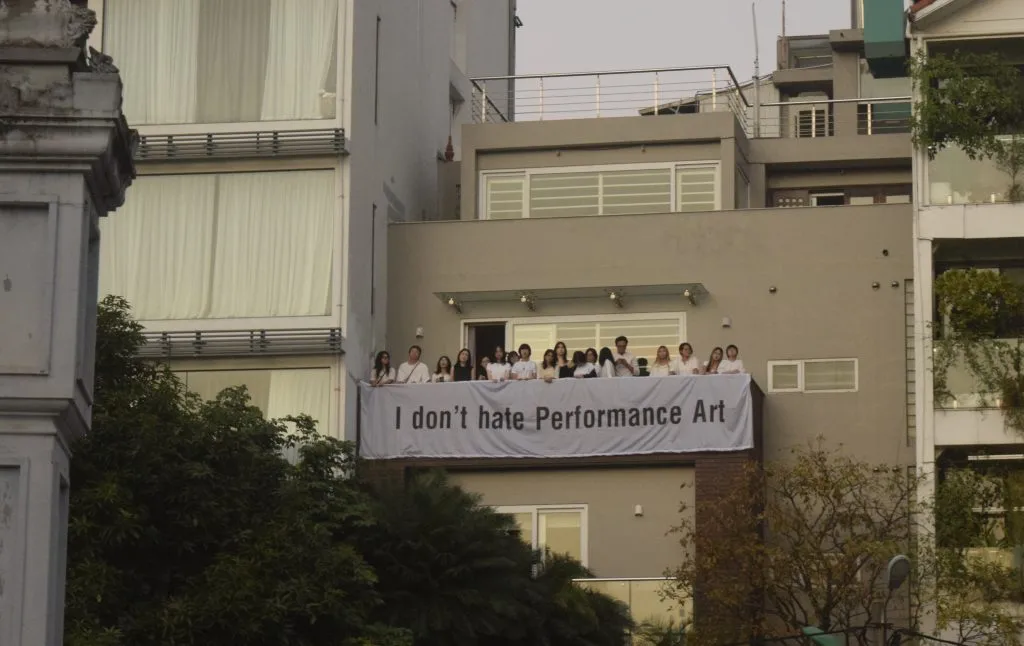
I spent one evening at Dib Bangkok, one of the region’s most talked-about private museums, which just opened this past December. Sitting inside a James Turrell installation, I watched the light shift, from sunset into a field of stars, surrounded by a mix of local art-world regulars and curious visitors. On another evening, in Hanoi, I attended the opening of a new exhibition, “Murmur,” at the Vietnam Art Collection (VAC), which drew a similarly mixed crowd—predominantly locals, who were joined by a small but noticeable number of international travelers, most straight from Hong Kong.
In both places, there was a sense of energy building that was not yet fully visible. The experiences made me realize that, while sales totals and fair brands can serve as benchmarks of centrality, slower, structural transformations are taking place throughout Asia that merit closer attention. To put it another way: It’s time to look beyond the Hong Kong and Seoul models.
Both Bangkok and Hanoi are in a critical yet still undefined phase. They are no longer isolated scenes, but they do not yet have fully formed art ecosystems. They are not quite hubs, but they are no longer peripheral. Interestingly, private initiatives are leading the charge in both places.
In Bangkok, change has been a gradual, cumulative process, marked by experimentation, which may help make it sustainable for the long haul. The scene has multiple overlapping layers, including the Bangkok Art Biennale, led by a foundation and embedded in commercial and public spaces; private ventures such as Dib Bangkok and Bangkok Kunsthalle; and several galleries and artist-run spaces. Together, they form a loose but growing network.
Dib Bangkok offers a useful case study. It’s opened as various accumulated efforts are coming to fruition. As its director, Miwako Tezuka, told me, the number of galleries in Bangkok has increased since she first visited the city in 2018, and more hybrid and long-term models have emerged, with some commercial galleries, like Bangkok CityCity Gallery and SAC Gallery, developing nonprofit-oriented programs alongside their commercial programs.

Which City Will Be the Next Asian Art Hub? That’s the Wrong Question
Which city will become the next Asian art hub? That’s been a popular parlor game in the industry recently, with players pointing to auction results and ambitious new art fairs to make their cases. After Art Basel Hong Kong late last month, I headed to two contenders, Bangkok and Hanoi, a trip that offered a fresh lens for understanding the playing field.
I spent one evening at Dib Bangkok, one of the region’s most talked-about private museums, which just opened this past December. Sitting inside a James Turrell installation, I watched the light shift, from sunset into a field of stars, surrounded by a mix of local art-world regulars and curious visitors. On another evening, in Hanoi, I attended the opening of a new exhibition, “Murmur,” at the Vietnam Art Collection (VAC), which drew a similarly mixed crowd—predominantly locals, who were joined by a small but noticeable number of international travelers, most straight from Hong Kong.
In both places, there was a sense of energy building that was not yet fully visible. The experiences made me realize that, while sales totals and fair brands can serve as benchmarks of centrality, slower, structural transformations are taking place throughout Asia that merit closer attention. To put it another way: It’s time to look beyond the Hong Kong and Seoul models.
Both Bangkok and Hanoi are in a critical yet still undefined phase. They are no longer isolated scenes, but they do not yet have fully formed art ecosystems. They are not quite hubs, but they are no longer peripheral. Interestingly, private initiatives are leading the charge in both places.
In Bangkok, change has been a gradual, cumulative process, marked by experimentation, which may help make it sustainable for the long haul. The scene has multiple overlapping layers, including the Bangkok Art Biennale, led by a foundation and embedded in commercial and public spaces; private ventures such as Dib Bangkok and Bangkok Kunsthalle; and several galleries and artist-run spaces. Together, they form a loose but growing network.
Dib Bangkok offers a useful case study. It’s opened as various accumulated efforts are coming to fruition. As its director, Miwako Tezuka, told me, the number of galleries in Bangkok has increased since she first visited the city in 2018, and more hybrid and long-term models have emerged, with some commercial galleries, like Bangkok CityCity Gallery and SAC Gallery, developing nonprofit-oriented programs alongside their commercial programs.